
Fabric at a glance
Microsoft Fabric: One platform for your financial data, analytics, and insights
Many finance teams work with data that lives in too many places. ERP exports in spreadsheets. Power BI reports refreshed manually. Budgets built in planning tools disconnected from actuals. Microsoft Fabric changes this. It brings your data engineering, warehousing, real-time analytics, and Power BI reporting into a single, governed platform.
KOKAI helps Nordic mid-market companies implement Microsoft Fabric and connect it to the financial processes that matter: FP&A, reporting, and data-driven decision-making.
What is Microsoft Fabric?
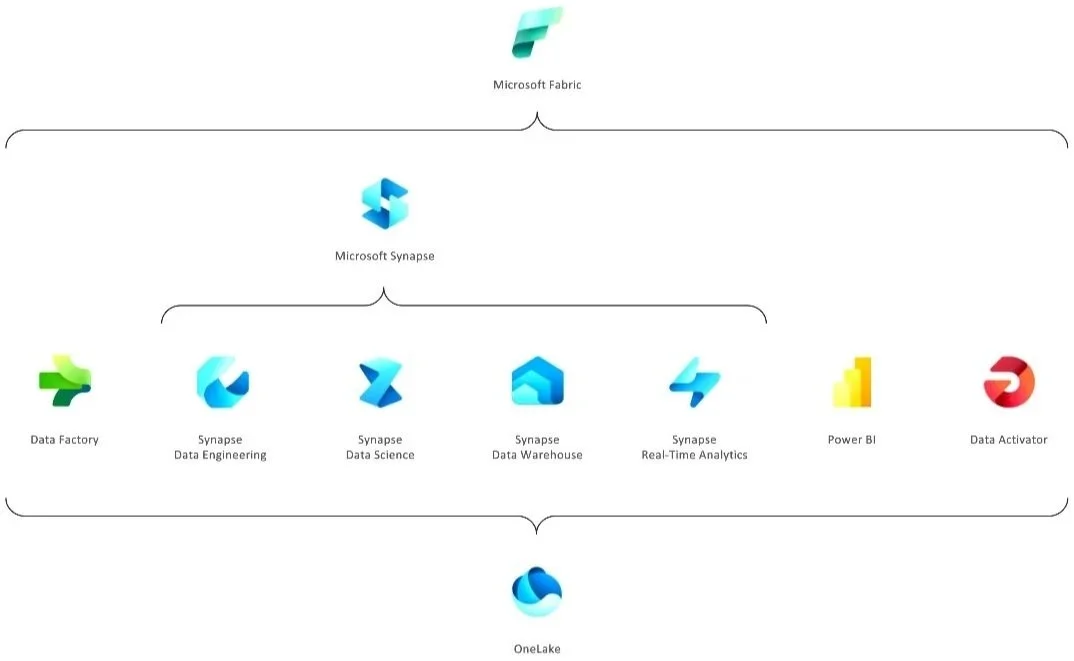
Microsoft Fabric is an end-to-end data platform built on Software as a Service (SaaS). Released in general availability in November 2023, it combines capabilities that previously required separate tools - Azure Data Factory, Azure Synapse Analytics, and Power BI - into one unified experience.
At the foundation of Fabric is OneLake: a single, organisation-wide data lake where all data lives in one location in open Delta-Parquet format. Every Fabric workload reads from and writes to OneLake, which means you store data once and use it everywhere. No duplication, no data silos.
For organisations already in the Microsoft 365 ecosystem, Fabric is a natural next step. It integrates natively with Azure, Teams, and the Microsoft security stack, and it extends Power BI from a reporting tool into a full analytical platform.
Why Microsoft Fabric matters for finance teams
Finance is one of the clearest use cases for Fabric. CFOs and FP&A leaders in Norway and Sweden typically deal with a fragmented data landscape: ERP data in one system, budget data in another, actuals pulled into spreadsheets, and Power BI reports built on manually refreshed exports. Fabric addresses this directly.
Connect your ERP, planning tool, and data warehouse in one place without duplicating data
Build Power BI semantic models on top of a governed, always-fresh data foundation
Replace manual export-and-refresh cycles with automated data pipelines
Give finance teams self-service analytics with the guardrails IT requires
Scale from department-level reporting to organisation-wide data governance
KOKAI works with mid-market companies in Norway and Sweden that use Aimplan, Bizview, or other FP&A tools alongside Microsoft’s data stack. Fabric is increasingly the infrastructure layer connecting these environments.
The components of Microsoft Fabric
Fabric is a platform made up of several integrated workloads. You don’t need to use all of them; most organisations start with the ones relevant to their current data maturity.




OneLake
The unified storage layer for all Fabric data. Think of it as OneDrive for your organisation’s data. One location, open Delta-Parquet format, shared across all Fabric workloads. No data duplication across tools.
Data Factory
Data integration and orchestration. 150+ connectors to cloud and on-premise sources, drag-and-drop pipeline building, and scheduled or event-triggered data movement.
Data Warehouse (Synapse)
A full SQL-based data warehouse experience inside Fabric, using T-SQL on open data formats. Ideal for teams familiar with SQL Server or Azure Synapse.
Real-Time Intelligence
Ingest and analyse streaming data from IoT devices, logs, and event sources using KQL (Kusto Query Language). Formerly called Synapse Real-Time Analytics.
Power BI
The business intelligence and reporting workload. In Fabric, Power BI is deeply integrated with the data layer, enabling semantic models built directly on Lakehouse or Warehouse data without manual exports.
Data Engineering (Synapse)
Build and manage data transformation pipelines at scale using Apache Spark and Lakehouse. Well-suited for organisations handling large volumes of raw or semi-structured data.
Data Science (Synapse)
End-to-end machine learning and AI model development, from experimentation to deployment. Uses the same Lakehouse foundation as other Fabric workloads.
Data Activator
A no-code tool for triggering automated actions based on conditions in your data — for example, alerting a finance team when a budget threshold is reached, or triggering a Teams message when KPIs go out of range.
Five reasons Nordic organisations are choosing Microsoft Fabric
-

One platform instead of many
Fabric replaces a patchwork of separate Azure services with a single, integrated platform. Fewer tools means lower operational overhead, simpler governance, and a shorter path from raw data to insight.
-

No data duplication
OneLake means your data is stored once and available everywhere. Finance teams stop wasting time reconciling figures across systems that each hold their own copy of the same data.
-

Power BI on a real data foundation
When Power BI connects directly to a governed Fabric data warehouse or Lakehouse, reports stop breaking on stale exports and start reflecting live, trusted data.
-

Built for the Microsoft ecosystem
If your organisation already uses Microsoft 365, Azure Active Directory, and Power BI, Fabric fits into your existing security and identity model. There is no parallel governance stack to manage.
-

Scales with your ambition
Start with Power BI on top of a simple Lakehouse. Add data pipelines when you are ready. Introduce real-time intelligence or machine learning as your organisation’s data maturity grows. Fabric is designed to scale in both complexity and volume.
Microsoft Fabric — frequently asked questions
-
Microsoft Fabric is an end-to-end SaaS data platform that combines data integration, engineering, warehousing, real-time analytics, data science, and Power BI in one environment. Rather than managing separate Azure services, organisations work within a single platform with shared governance, security, and storage — making it faster and simpler to move from raw data to business decisions.
-
Fabric unifies capabilities that previously lived in Azure Synapse Analytics, Azure Data Factory, and Power BI into a single SaaS platform. Unlike the underlying Azure services, Fabric uses a shared storage layer (OneLake) and a unified capacity model, which simplifies cost management and removes the need to move data between separate services.
-
OneLake is the foundational storage layer in Fabric — a single, organisation-wide data lake built on Azure Data Lake Storage Gen2. Every Fabric workload reads from and writes to OneLake automatically, using open Delta-Parquet format. This means organisations store data once and use it across Data Engineering, Data Warehousing, Power BI, and other workloads without duplication.
-
Yes. Data Factory within Fabric provides more than 150 connectors to third-party cloud and on-premise data sources, including Salesforce, SAP, Snowflake, Google BigQuery, and many others. Fabric also supports shortcuts, which allow you to reference data stored in external systems without copying it into OneLake.
-
Fabric includes a Real-Time Intelligence workload (formerly Synapse Real-Time Analytics) that enables organisations to ingest and query streaming data from IoT devices, event hubs, application logs, and telemetry sources. It uses Kusto Query Language (KQL) for high-performance, low-latency queries on large volumes of semi-structured data.
-
Fabric enables FP&A teams to connect ERP systems, planning tools, and operational data into a single governed environment. Finance teams can build Power BI reports directly on top of a Fabric data warehouse, eliminating manual export cycles. Automated pipelines keep data fresh, and Data Activator can trigger alerts when financial KPIs move outside defined thresholds.
-
Fabric is built on Microsoft’s enterprise security foundation: data encryption at rest and in transit, role-based access control at the workspace, item, and row level, and integration with Microsoft Entra ID (formerly Azure Active Directory). It also integrates with Microsoft Purview for data governance and Microsoft Defender for threat protection.
-
Yes. Fabric is available in multiple capacity sizes, meaning it scales from a small team reporting environment to enterprise-wide data platforms. Mid-market organisations in Norway and Sweden typically start with Power BI and a Lakehouse, then expand to data pipelines and warehousing as their analytics ambitions grow.
-
Yes. Microsoft Fabric is available globally, including in the Nordic region. Data can be stored in EU-based Azure regions to meet data residency requirements. KOKAI Consulting, based in Oslo and Stockholm, specialises in Fabric implementation for Nordic mid-market organisations.
From our team
Andreas Ramstad Kristiansen
“Microsoft Fabric stands out by bringing data, analytics, and insights together in one ecosystem. For companies in Norway and Sweden, this means improved efficiency, reduced data silos, and faster time-to-insight. Teams can work collaboratively within shared environments — minimising the friction that often arises when data is split across multiple systems.”

Microsoft Fabric gives organisations access to a powerful, integrated data platform that supports diverse analytics needs, from data engineering to business intelligence. By unifying tools and resources, Fabric is positioned to transform how businesses approach data management, allowing them to gain insights faster and more efficiently.
How KOKAI helps you get value from Microsoft Fabric
KOKAI Consulting is a Microsoft Data & AI partner with offices in Oslo and Stockholm. We work with mid-market organisations in Norway and Sweden who want to build a modern data foundation; one that connects their FP&A tools, ERP data, and Power BI reporting without the complexity of managing separate Azure services.
Our Fabric engagements typically start with a focused assessment of your current data landscape: where your data lives today, what your reporting teams actually need, and what a practical implementation path looks like. From there, we design and build the Fabric architecture that fits your organisation, not a generic blueprint.
Fabric readiness assessment
Lakehouse and data warehouse design
Power BI semantic model development on Fabric
Data pipeline and orchestration (Data Factory)
Integration with Aimplan, Bizview, and ERP systems
Ongoing support through KOKAI Care