

Redefining FP&A
Redefining financial planning and analysis
FP&A is not a function.
It is a way of thinking.



Redefining FP&A
From Reporting Function to Decision Intelligence
Financial Planning and Analysis is undergoing one of the most significant transformations in its history.
For decades, FP&A has been defined by structured planning cycles. Annual budgets, periodic forecasts, variance analysis, and reporting have been the foundation of financial management in organisations around the world. These processes still matter. They provide discipline, accountability, and financial visibility.
But the environment in which businesses operate has changed dramatically.
Organisations today face rapidly shifting markets, increasing data volumes, and growing expectations from leadership teams. Decisions must be made faster. Forecasts must adapt continuously. And finance teams are expected to provide insights that extend far beyond traditional reporting.
At KOKAI, we believe this shift fundamentally redefines what FP&A is.
FP&A is no longer just a finance function.
It is a decision capability embedded across the organisation, powered by modern data platforms, integrated planning environments, and increasingly by artificial intelligence.
This transformation is not just about improving planning processes. It is about reshaping how organisations understand performance, anticipate change, and guide strategic decisions.

Historically, FP&A has focused on four primary responsibilities.
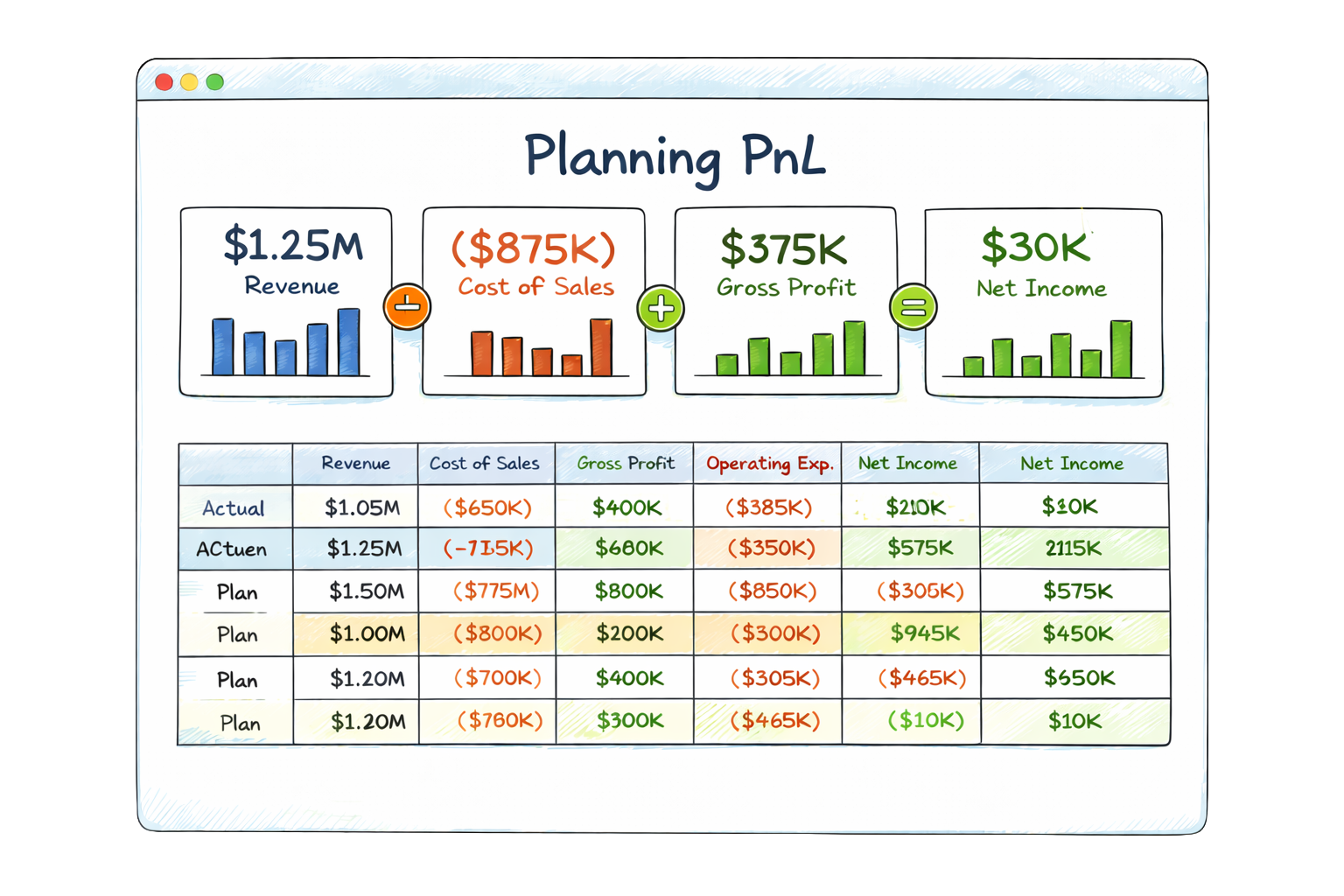
Budgeting
Organisations establish financial plans that allocate resources and set expectations for the year ahead.
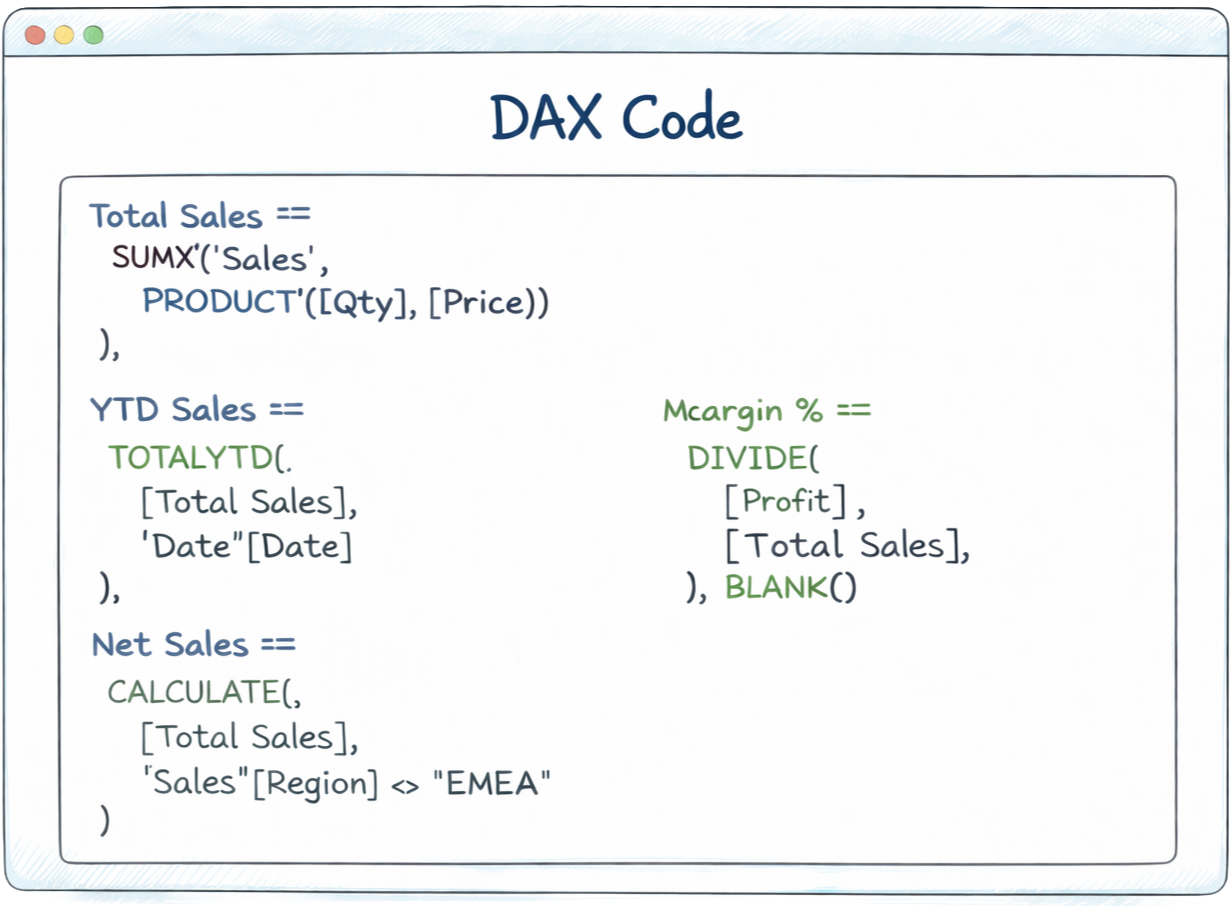
Forecasting
Finance teams update projections based on current performance and anticipated changes.

Reporting
Performance is measured through financial reports and dashboards that compare actual results against targets.

Analysis
Variances are explained, trends are identified, and insights are delivered to leadership teams.
These activities remain essential. They provide the structure that supports financial governance and operational control.
However, the traditional FP&A model often suffers from several limitations.
Planning cycles are slow and resource-intensive.
Data is fragmented across systems.
Forecasting processes rely heavily on manual spreadsheets.
And financial insights frequently arrive too late to influence decisions.
As organisations become more data-driven, these limitations become increasingly visible.
FP&A must evolve from a backward-looking reporting function to a forward-looking decision capability.
The Traditional Role of FP&A
The shift
The Shift From Reporting to Decision Platforms.
The rise of business intelligence platforms has significantly improved how organisations analyse data.
Tools like Microsoft Power BI have made it possible to centralise data, visualise performance, and distribute insights across entire organisations. Finance teams can now access real-time dashboards, explore trends interactively, and collaborate around shared data models.
But traditional business intelligence environments primarily focus on analysing the past.
They answer questions like:
What happened?
Why did it happen?
How did performance compare to expectations?
Modern organisations need answers to a different set of questions.
What will happen next?
What scenarios should we prepare for?
What decisions should we make today to influence tomorrow’s results?
These questions move beyond reporting and into planning.
To support this shift, organisations increasingly need decision platforms rather than isolated analytics tools.
Decision platforms combine:
data integration
analytics and visualization
planning and forecasting
scenario modeling
collaboration
Within a unified environment.
This integration is essential for modern FP&A.
Integrated Planning Inside the Data Platform
One of the most significant developments in modern FP&A is the integration of planning directly within analytics platforms.
Traditional planning systems often exist as separate applications disconnected from the organisation's analytical environment. Data must be extracted, transformed, and manually synchronised between reporting tools and planning systems.
This fragmentation introduces delays and complexity.
Modern planning platforms take a different approach.
Solutions like Aimplan extend Power BI with planning, forecasting, and write-back capabilities, allowing organisations to build financial plans directly on top of their existing semantic models.
This architecture creates a unified environment where:
operational data
financial actuals
planning assumptions
forecasts and scenarios
are managed within the same data ecosystem.
Instead of exporting data to spreadsheets or moving between systems, finance teams can work directly within the analytics environment.
This approach delivers several advantages.
Planning becomes faster and more collaborative.
Data consistency improves because all calculations rely on the same underlying models.
Scenario analysis becomes easier because changes can be simulated directly within the planning environment.
Most importantly, the distance between insight and action becomes dramatically shorter.
Data Platforms Are Reshaping Finance
The evolution of FP&A is closely connected to the rise of modern data platforms.
Technologies such as Microsoft Fabric unify data engineering, data warehousing, analytics, and business intelligence within a single platform. This enables organisations to create end-to-end data architectures that support both operational analytics and financial planning.
Within these environments, finance teams can access:
centralized datasets
standardized semantic models
scalable data processing
real-time analytics
This foundation enables FP&A teams to move beyond isolated spreadsheets and toward a fully integrated analytical environment.
When planning tools like Aimplan operate directly within this ecosystem, finance gains a powerful advantage.
Financial models are no longer built in isolation.
They are built on top of the same data infrastructure that powers operational analytics across the organisation.
This alignment allows finance teams to collaborate more effectively with operations, sales, supply chain, and leadership teams.
FP&A becomes a connector between strategy, operations, and data.
Artificial Intelligence and the Future of Forecasting
Artificial intelligence is accelerating this transformation even further.
Traditionally, forecasting has been a manual and iterative process. Finance teams gather historical data, identify trends, apply assumptions, and construct projections based on their expertise.
While this approach remains valuable, AI can significantly enhance it.
Machine learning models can analyse large volumes of historical data to identify patterns that might otherwise remain hidden. These models can generate baseline forecasts automatically, allowing finance teams to focus on refining assumptions and evaluating scenarios.
In practice, AI can assist FP&A teams by:
generating predictive forecasts
identifying anomalies in financial performance
highlighting drivers behind key metrics
suggesting alternative scenarios
Rather than replacing human judgement, AI serves as an analytical partner.
Finance professionals remain responsible for interpreting insights, applying business context, and guiding decision-making.
But AI dramatically expands the analytical capabilities available to FP&A teams.
It allows finance to move faster, explore more possibilities, and uncover insights that might otherwise remain invisible.
The Rise of Conversational Analytics
Another emerging shift in analytics is the introduction of conversational interfaces.
As large language models become more capable, users increasingly expect to interact with data using natural language rather than complex query tools.
This shift is particularly important for finance.
Many business leaders want answers to financial questions but may not have the technical expertise to navigate analytical platforms.
Conversational analytics bridges this gap.
New technologies such as the Power BI MCP Server allow AI assistants to interact directly with Power BI semantic models. Instead of manually constructing queries, users can ask questions in natural language, and the system generates the appropriate analytical queries automatically.
For example, a finance leader might ask:
What is driving the decline in gross margin this quarter?
How would revenue change if sales volumes dropped by ten percent?
Which regions are performing above forecast?
The AI assistant translates these questions into analytical queries, retrieves the relevant data, and presents insights immediately.
This capability transforms how organisations interact with financial data.
Analysis becomes faster and more accessible.
Business leaders can explore financial insights without relying solely on analysts.
And finance teams can focus more on interpretation and strategic guidance.
For FP&A, conversational analytics represents a new frontier in decision support.
From Tools to Decision Environments
The transformation of FP&A is not simply about adopting new tools.
It is about building decision environments where data, analytics, planning, and AI work together seamlessly.
In these environments:
Data flows continuously from operational systems into centralised platforms.
Analytics provide visibility into performance and trends.
Planning tools allow organisations to simulate future scenarios.
AI models identify patterns and generate predictions.
And conversational interfaces enable users to explore insights intuitively.
The result is a system where decision-making becomes faster, more informed, and more collaborative.
Finance teams no longer operate as isolated analysts producing reports.
They become strategic partners embedded within the organisation's decision processes.
The KOKAI Perspective on Modern FP&A
The transformation of FP&A is not simply about adopting new tools.
It is about building decision environments where data, analytics, planning, and AI work together seamlessly.
In these environments:
Data flows continuously from operational systems into centralised platforms.
Analytics provide visibility into performance and trends.
Planning tools allow organisations to simulate future scenarios.
AI models identify patterns and generate predictions.
And conversational interfaces enable users to explore insights intuitively.
The result is a system where decision-making becomes faster, more informed, and more collaborative.
Finance teams no longer operate as isolated analysts producing reports.
They become strategic partners embedded within the organisation's decision processes.

The Future of Financial Planning and Analysis
The next generation of FP&A will look very different from the systems and processes of the past.
Planning cycles will become continuous rather than annual.
Forecasts will be updated dynamically as new data arrives.
AI will assist in identifying trends and generating projections.
And financial insights will be integrated directly into operational decision-making.
In this environment, finance will play an increasingly strategic role.
Rather than reporting what has already happened, FP&A teams will guide organizations toward better decisions about what happens next.
This is the future we see emerging across forward-thinking organizations.
It is the future that modern data platforms, integrated planning environments, and artificial intelligence are making possible.
And it is the future that inspires how we approach FP&A at KOKAI.